EN
EN UK
UK RU
RU
In commercial pig farming, preserving herd gut health is a key driver of high herd productivity. The phase-out of in-feed antibiotics and growth promoters compels producers to seek effective and safe alternatives for controlling pathogenic microflora. Administering organic acids via drinking water systems – is one of the most rapid and economically viable methods for stabilizing animal digestion.
Characteristics and Composition of Modern Feed Acidifiers
Modern liquid feed additives are complex synergistic complexes rather than mere solutions of isolated mono-acids. A high-grade water acidifier is formulated based on a blend of free and buffered organic acids (formic, lactic, propionic, citric), supplemented with salts of these acids. Such a composition enables a gentle reduction in drinking water pH without compromising its palatability or causing equipment corrosion.
A crucial feature of latest-generation innovative products is the inclusion of specific lipid components. Formulations containing fatty acids can effectively cross the stomach’s acid barrier and exert a targeted antibacterial effect directly in the small and large intestines. This ensures total control over pathogens along the entire length of the animal’s gastrointestinal tract.
Key Benefits of Using Acidifiers in Swine Production
By regularly utilizing a professional swine acidifier, a farm addresses several critical objectives at once. Specialized organic acids in water improve animal health and help save costs.
The primary advantages of using acidifiers include:
- Antibacterial barrier. Eliminating infectious agents directly in drinking water before they enter the animal’s body.
- Digestive stimulation. Activating pepsin production and the pancreas’s endogenous enzymes for efficient protein breakdown.
- Microbiota optimization. Establishing an ideal acidic environment for the proliferation of beneficial lacto- and bifidobacteria in the gut.
- Productivity enhancement. Improving nutrient absorption, accelerating growth rates, and reducing feed conversion ratios.
- Veterinary cost savings. Significantly lowering expenditures on antibiotics and therapeutic drugs due to higher herd livability.
- Equipment hygiene. Maintaining pipe internal cleanliness and preventing limescale buildup across the drinking line network.
All these factors help pigs grow healthy and uniform in size. As a result, the farmer achieves consistent profitability without excessive herd treatment expenses.
Efficacy of Drinking Water Acidification in Swine Facilities
Introducing liquid additives into the watering system demonstrates a faster therapeutic response compared to dry feed-grade alternatives. The reason is that sick or stressed animals may completely reject solid feed while continuing to drink actively and in large quantities. Consequently, a water acidifier for pigs guarantees that every animal receives the required dose of protective compounds.
Reducing drinking water pH to optimal levels (within 3.8–4.5) completely halts the proliferation of gram-negative bacteria such as E. coli, Salmonella spp., and Campylobacter. This minimizes secondary infection risks and stabilizes the facility’s epizootic status. Continuous water quality monitoring prevents pathogen transfer between production batches through shared drinking lines.
Potential Risks, Limitations, and Common Application Errors
Uncontrolled application of organic acids can lead to serious complications. Dosage miscalculations or neglecting baseline veterinary sanitation rules can harm livestock and damage costly equipment.
Below are key risks and frequent mistakes made by farmers when implementing a water acidifier for piglets:
- Lack of water quality testing. Without assessing baseline hardness and alkalinity, calculating accurate product dosage is impossible.
- Disregarding buffer capacity. In alkaline water, standard acid doses are neutralized and fail to deliver the intended antibacterial effect.
- Excessive acidification. Dropping pH below 3.5 creates a bitter taste, prompting animals to refuse water entirely.
- Introduction into contaminated plumbing lines. Acid triggers aggressive peeling of aged biofilm from the inner walls of uncleaned pipes.
- Nipple drinker blockage. Large flakes of dislodged organic matter instantly clog narrow equipment openings, depriving compartments of water.
- Co-administration with vaccination. Running acidic solutions through a dosing pump completely inactivates live vaccines, negating immunization outcomes.
- Antibiotic inactivation. An acidic environment degrades active pharmaceutical ingredients in many therapeutic drugs, reducing treatment efficacy.
- Abrupt product withdrawal. Sudden cessation of acidification can trigger an immediate rebound in opportunistic gut pathogen proliferation.
A sound strategy for introducing additives into livestock regimens mitigates these hazards. Rigorous adherence to operational protocols allows operations to maximize the sanitation and performance benefits of waterline treatments.
Mode of Action and Administration Protocol: The Case of Neosens Liquid Acidifier
The innovative formulation Neosens by Sanfort is a high-concentration combined complex where classical plant-derived organic acids are fortified with a specialized component. The primary driver of this product’s performance – is the inclusion of medium-chain fatty acids (MCFAs). Owing to their distinct chemical structure, MCFAs serve as direct antibacterial agents: they readily penetrate the lipid membranes of gram-positive and gram-negative bacteria, disrupting cellular integrity from within.
The protocol for utilizing Neosens liquid acidifier in swine operations is structured around defined technological phases:
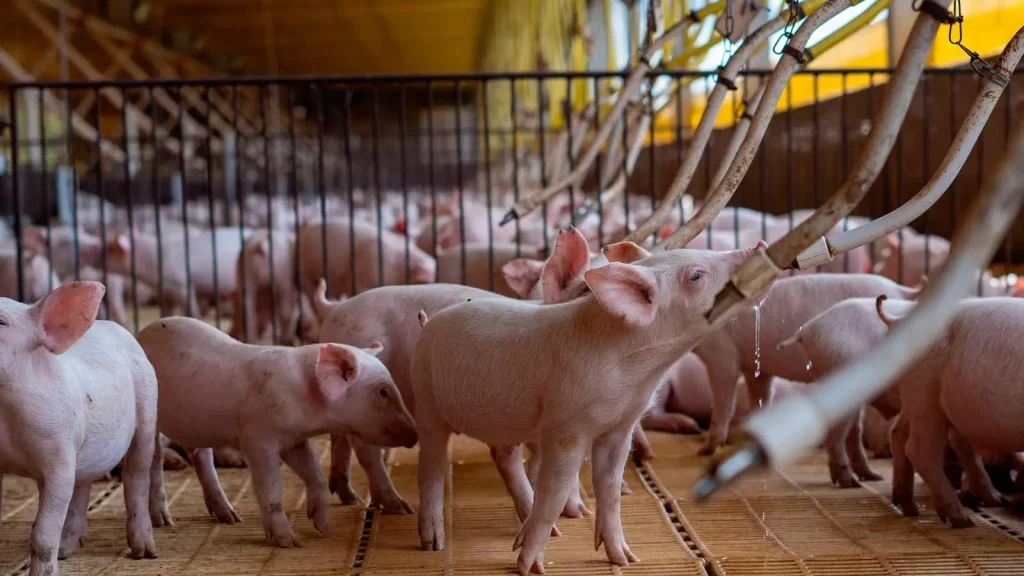
- Piglet weaning period. Administering the formulation via the watering system at a dosage of 0.3–1.0 L per 1,000 L of water as a continuous course during the initial 10–14 days post-transfer. This supports the piglet’s immature stomach in processing solid rations and prevents «post-weaning diarrhea».
- Management stressors (vaccination, regrouping). A prophylactic course administered 2 days prior to and 3 days following the event at standard dosages to stabilize intestinal microflora.
- Finishing period. Cyclic delivery (e.g., 3 days per week) to maintain optimal feed conversion ratios and enhance drinking water palatability.
Deploying Neosens enables operations to rear livestock without prophylactic antibiotics, securing peak average daily gains while ensuring the biological safety of finished meat products.